For homes
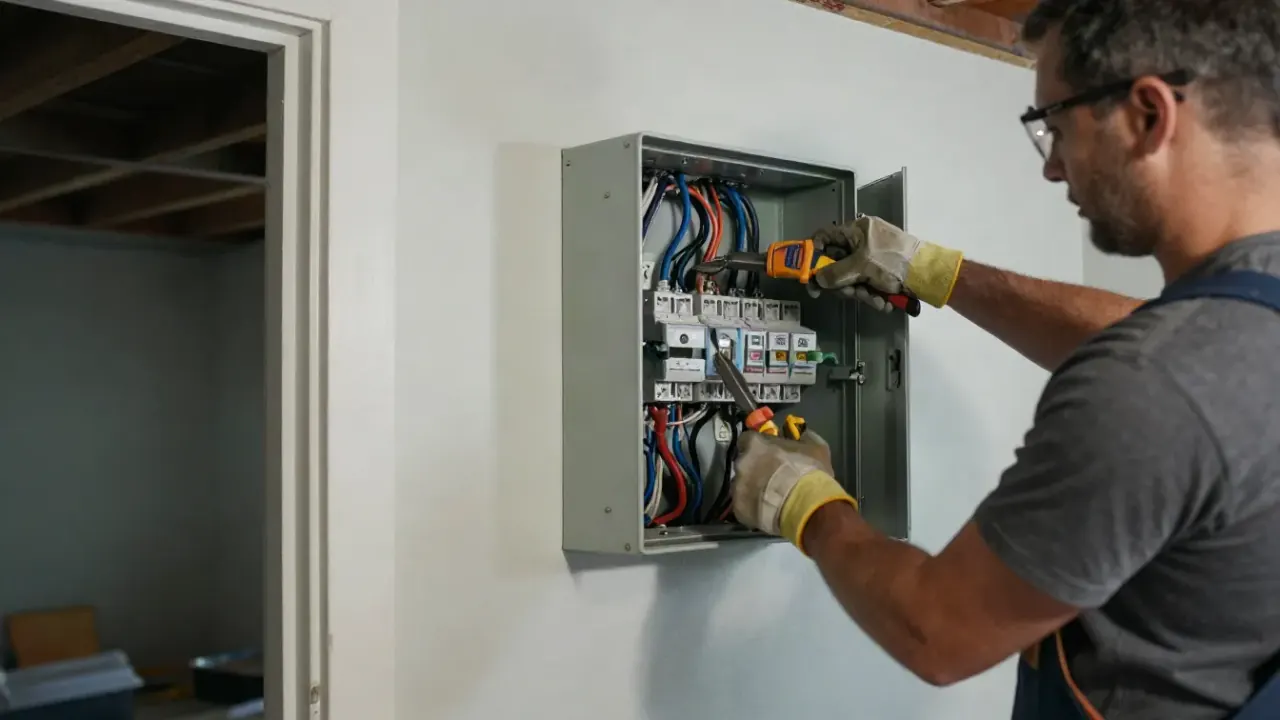
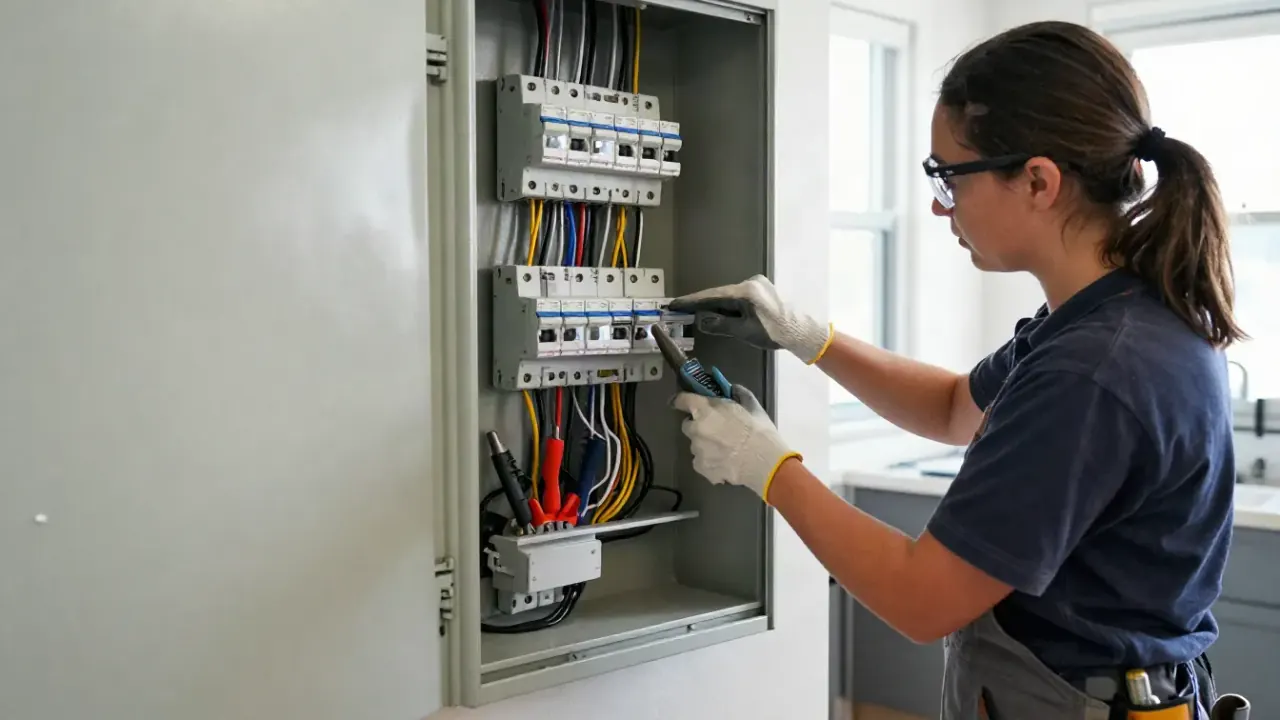
We protect your panel, your electronics, and your EV charger with one device. You get a labeled breaker and a walkthrough of what to check after storms.
- Storm-fried electronics
- EV charger protection
- Solar inverter coverage
Whole-home surge protection Upland CA installs a heavy-duty surge protective device at your main panel, so a single strike can't fry your HVAC, EV charger, or server rack. If your neighborhood has taken a hit from San Bernardino County storm seasons, you already know the risk. We mount, wire, and test the unit in one visit.
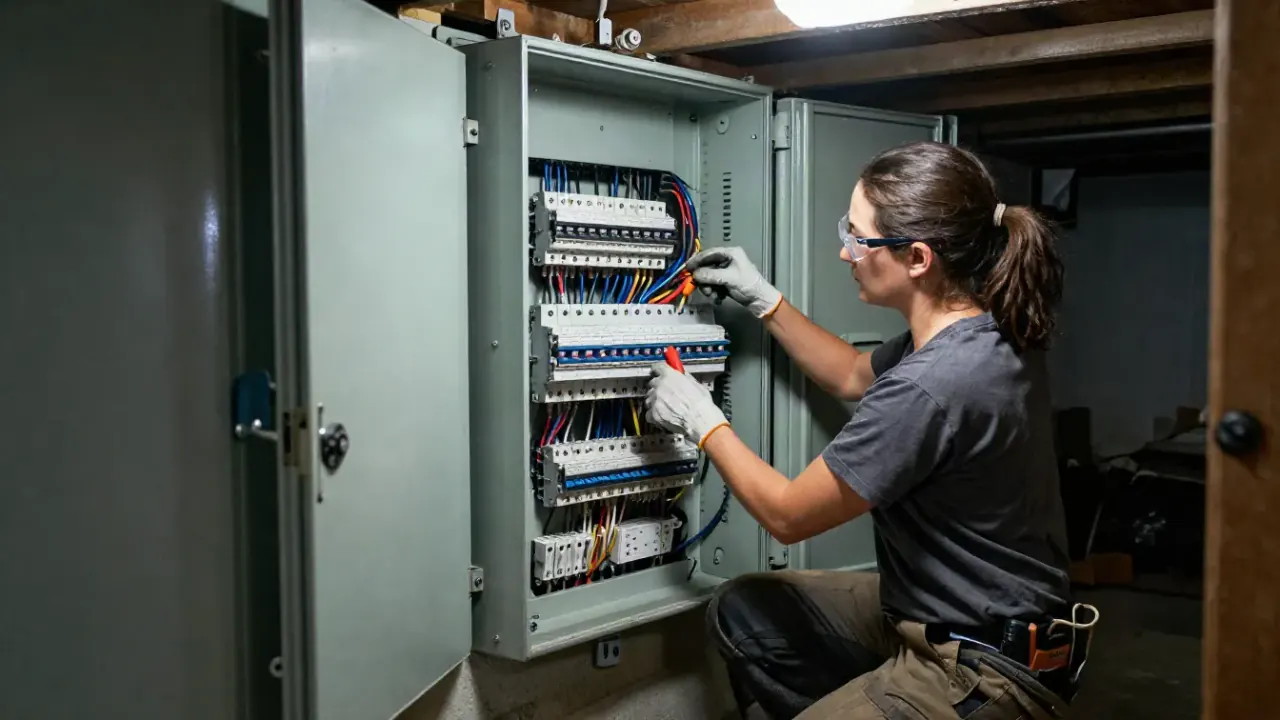 Panel inspectionGrounding testBreaker labeling
Every install includes the device, a dedicated breaker, mounting hardware, grounding verification, and testing. If your panel needs repair before the suppressor can go on, we quote that separately and explain why it's necessary.
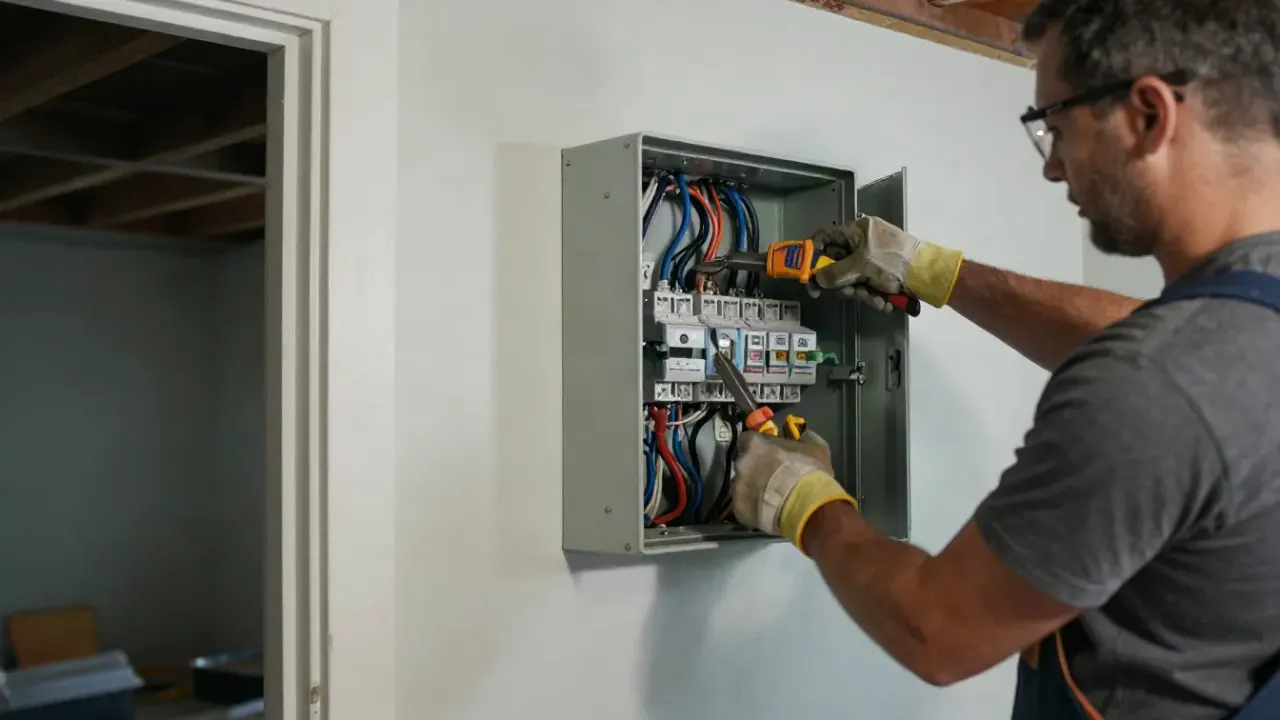
A UL-listed panel-mounted unit sized to your service amperage. We stock Square D, Eaton, and Siemens compatible models so the device matches your existing panel brand and bus bar configuration.
The suppressor gets its own breaker, not a shared slot. That keeps the circuit isolated and makes it easy to disconnect the device for panel service without killing power to the rest of the house.
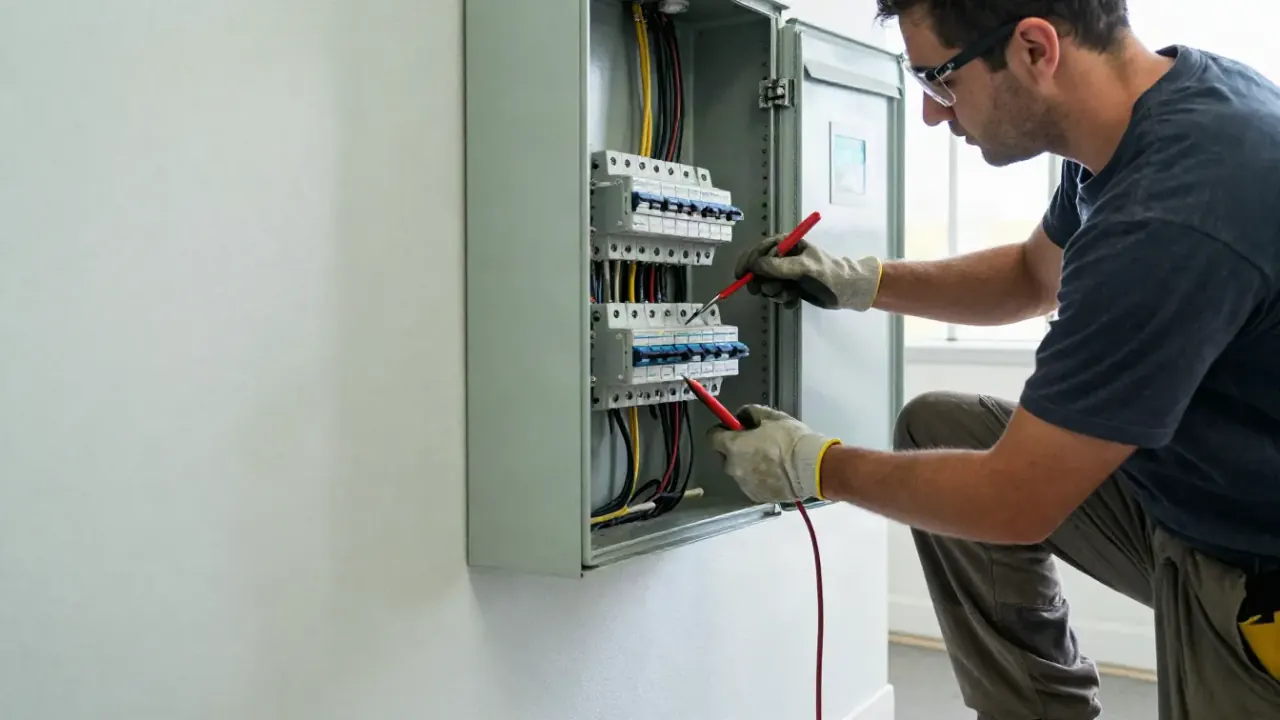
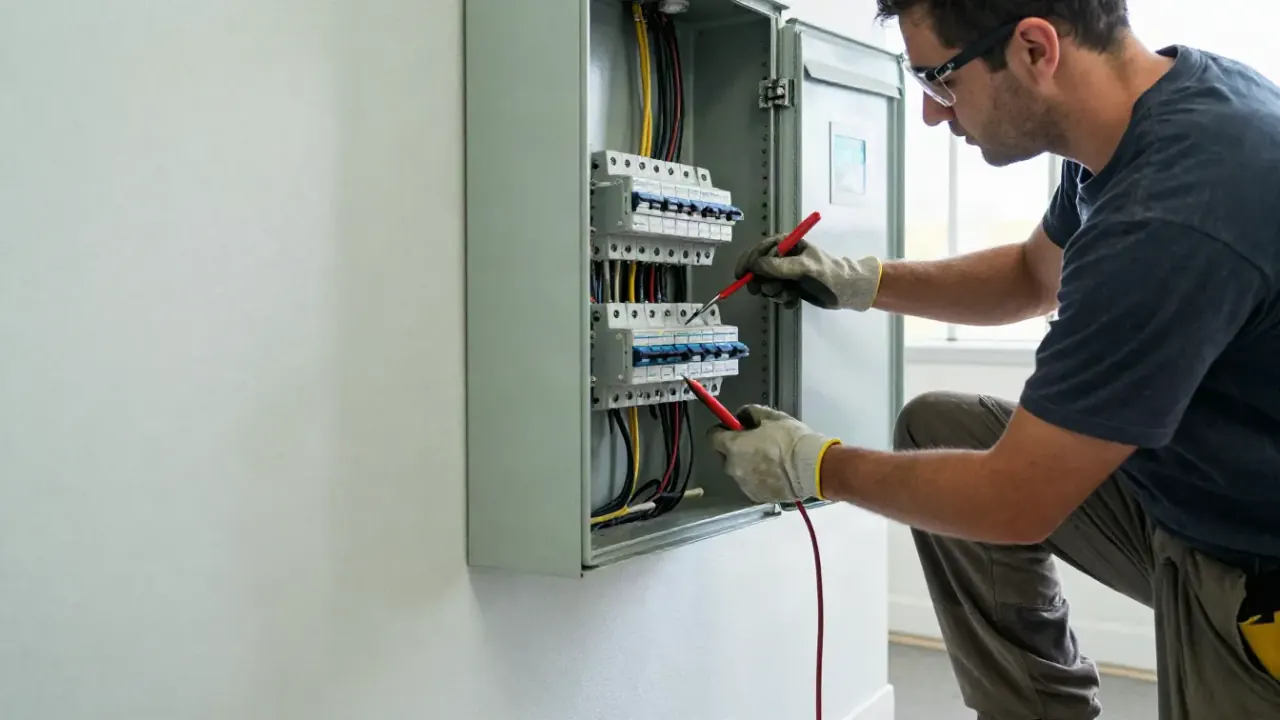
We test the grounding electrode conductor and the panel's neutral bond with a multimeter and clamp meter. If the ground path is compromised, the suppressor won't perform, so we fix it before we finish.
The new breaker gets a clear label identifying it as the surge protection circuit. That matters for the next electrician who opens the panel and for you if you ever need to reset or replace the device.
We energize the circuit, confirm the device's status indicators, and verify voltage at the panel. Then we walk you through what normal looks like so you can spot a problem after a storm.
The approach is the same for a home and a business. What changes is the access, the schedule and who needs the paperwork.
We protect your panel, your electronics, and your EV charger with one device. You get a labeled breaker and a walkthrough of what to check after storms.
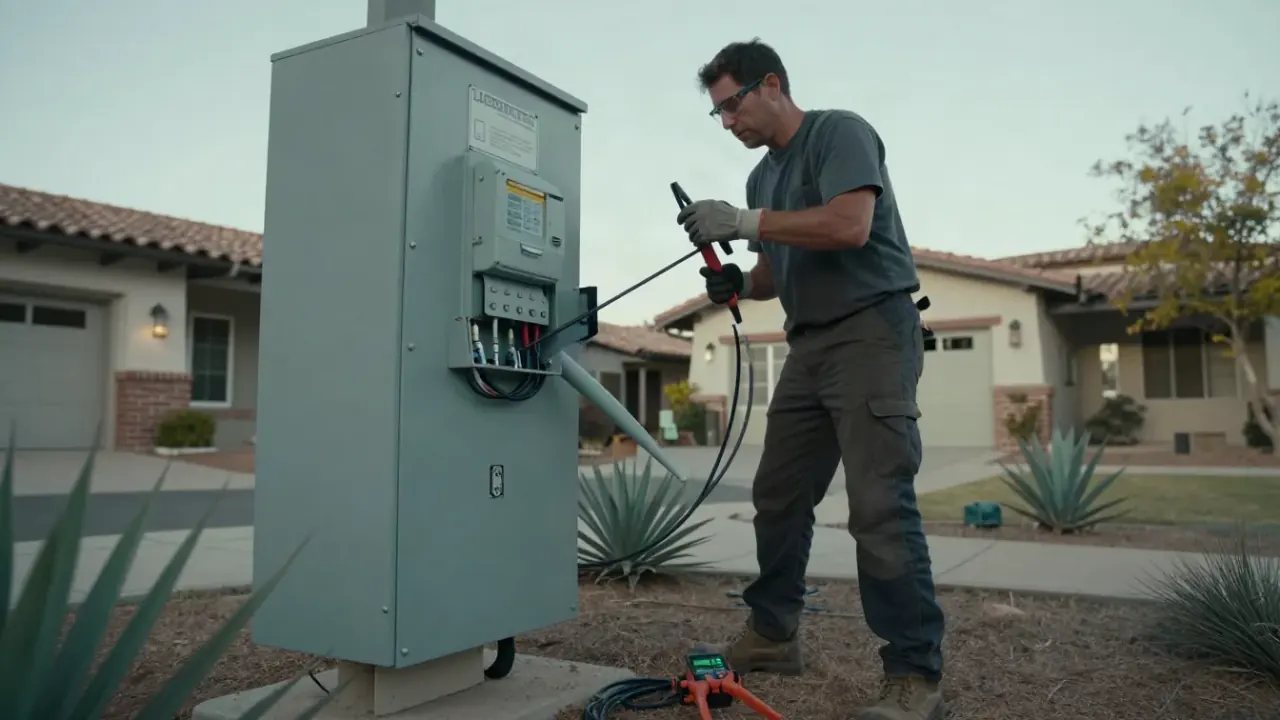
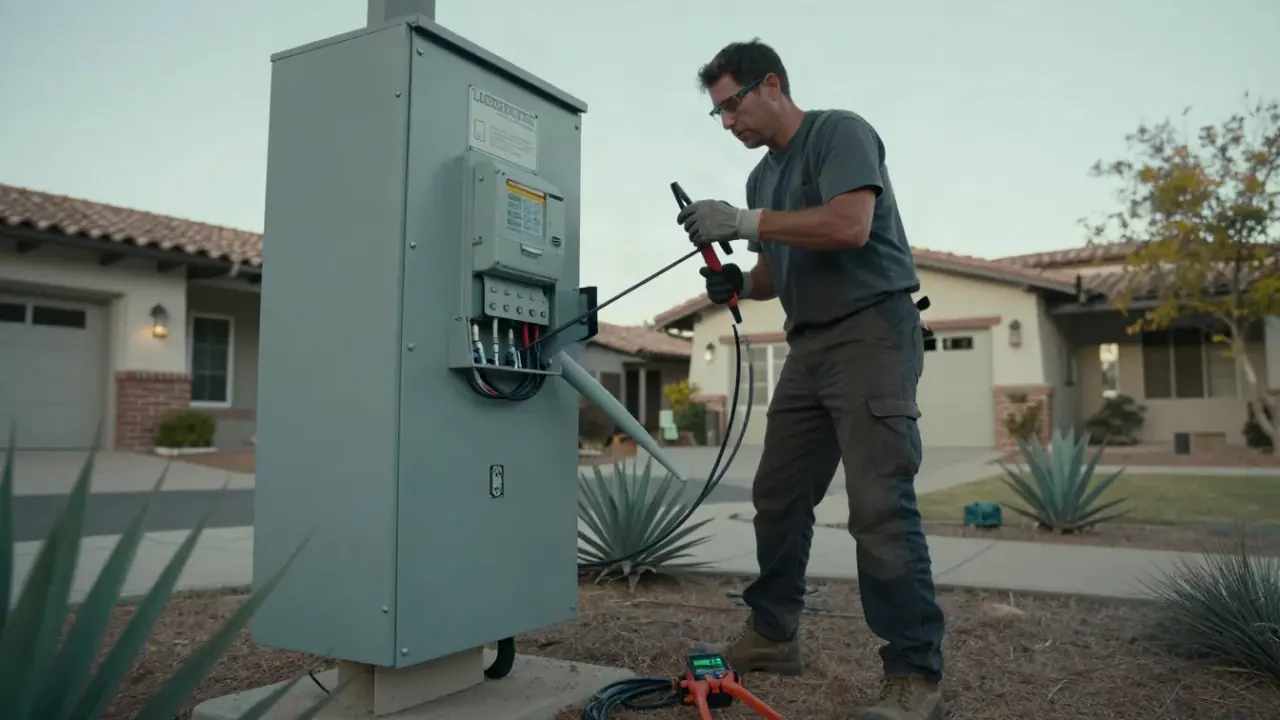
We protect shared services and tenant equipment from utility surges. You get documentation for your property file and a labeled breaker for future service.
A plain-language look at what Whole-Home Surge Protection involves and when it is needed.
See how it worksWhole-home surge protection Upland CA is a panel-mounted surge protective device that intercepts voltage spikes at the service entrance before they travel through branch circuits. When a spike hits, the device clamps it to ground in under a nanosecond. That protects your panel, your subpanel, and every device on the circuit.
Upland sits in a high-voltage corridor where summer monsoons and Santa Ana winds push utility switching surges through the grid. If you've priced a surge protector installation near me Upland, you know the cheap options don't cover a 200-amp service. We size the device to your panel's amperage, torque every lug to spec, and label the breaker so the next electrician knows exactly what they're looking at.
A surge device clamps spikes at the panel before they reach your electronics.
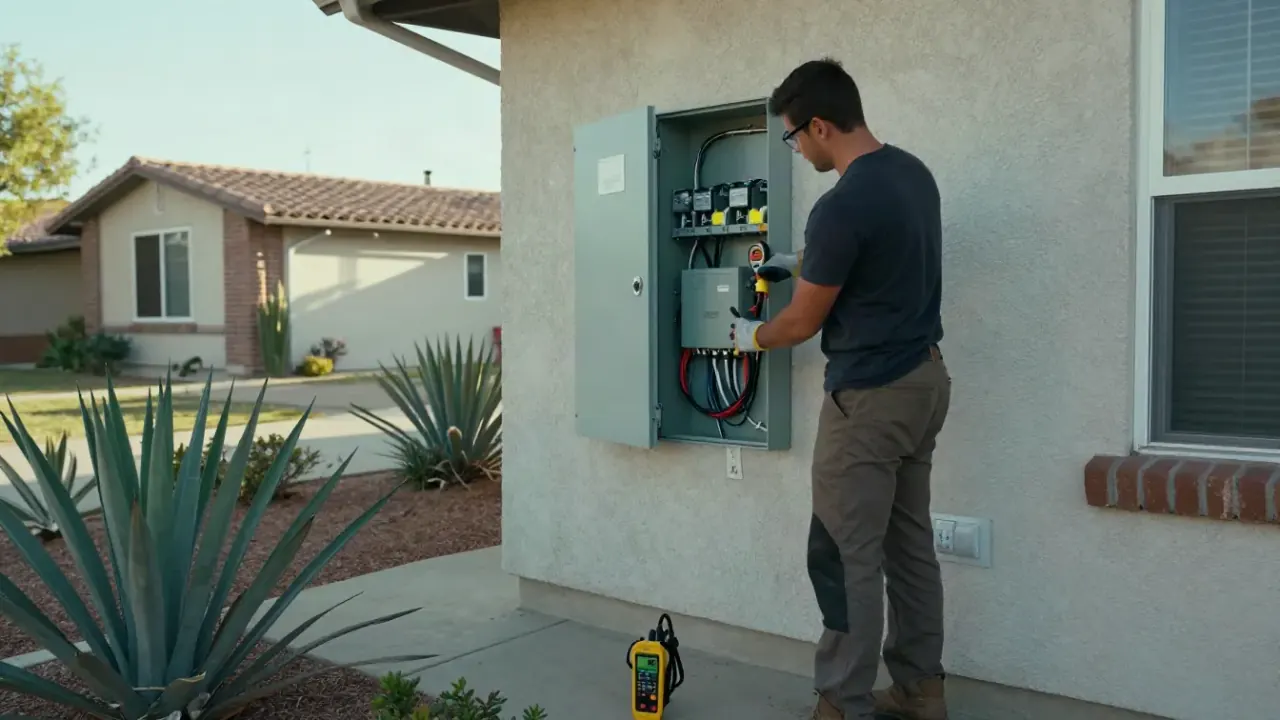
Most installs are done in a single visit. Here's the sequence from phone call to final test.
We ask for your panel brand, main breaker amperage, and whether you have solar or an EV charger. That tells us which surge protective device to bring. Most calls take 5 to 10 minutes, and we schedule a same day whole-home surge protection Upland CA visit when the calendar allows.
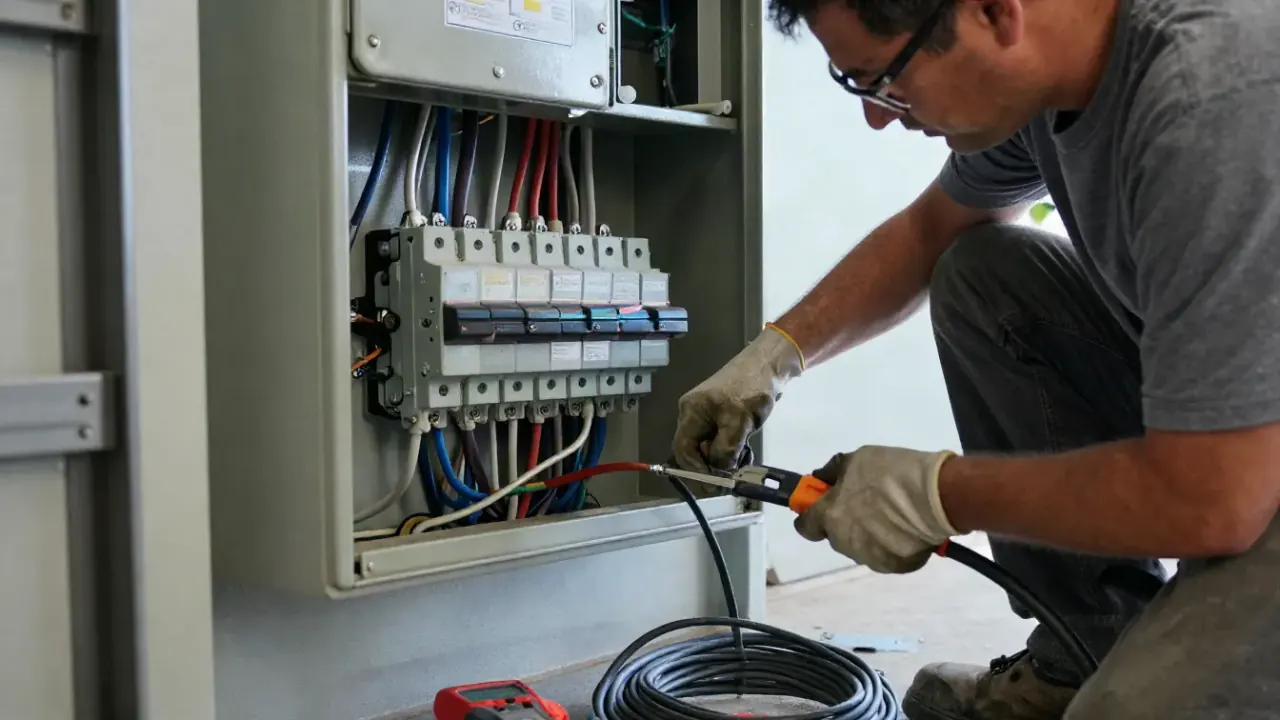
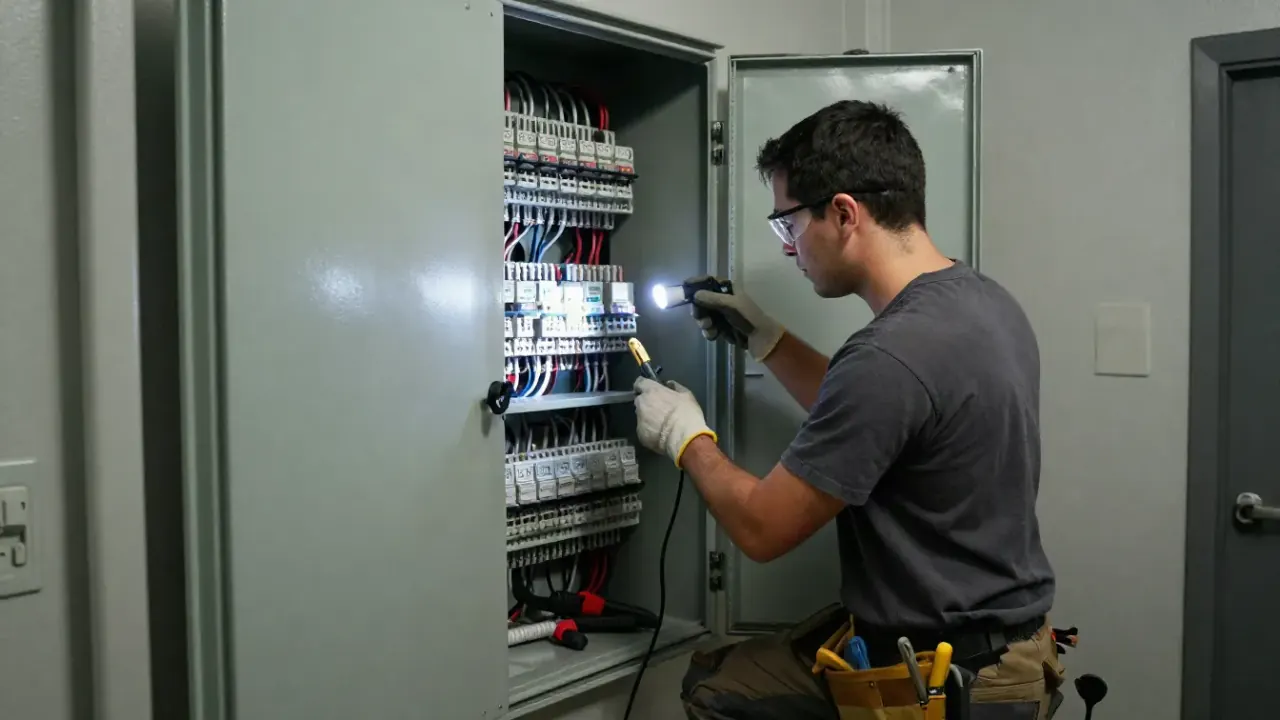
On arrival, we pull the dead front and inspect the bus bars, main lugs, and grounding electrode conductor. If we find aluminum wiring issues or a Federal Pacific panel failure in progress, we stop and explain your options before installing anything. Safety first, always.
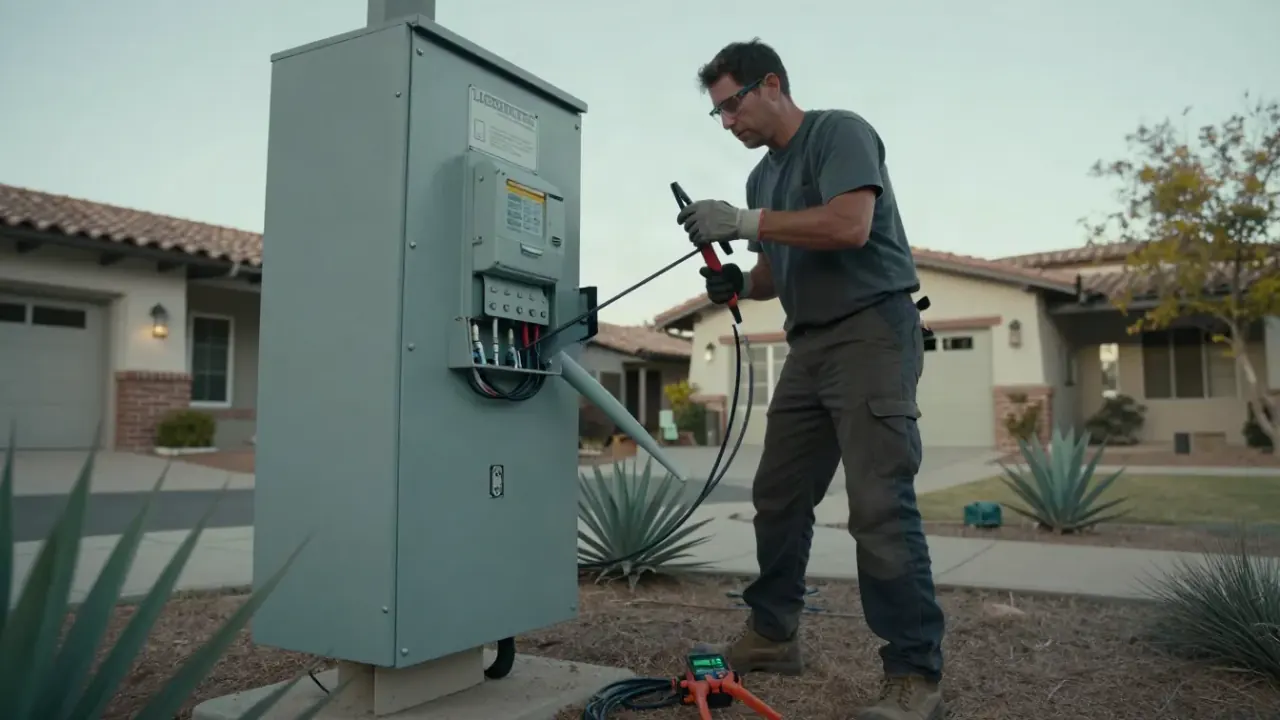
We mount the suppressor beside the panel using a knockout and a short nipple, then run conductors to a dedicated 2-pole breaker. Every termination gets torqued with a torque screwdriver to the manufacturer's spec. We use copper wire and keep the leads as short as possible for the lowest impedance path to ground.
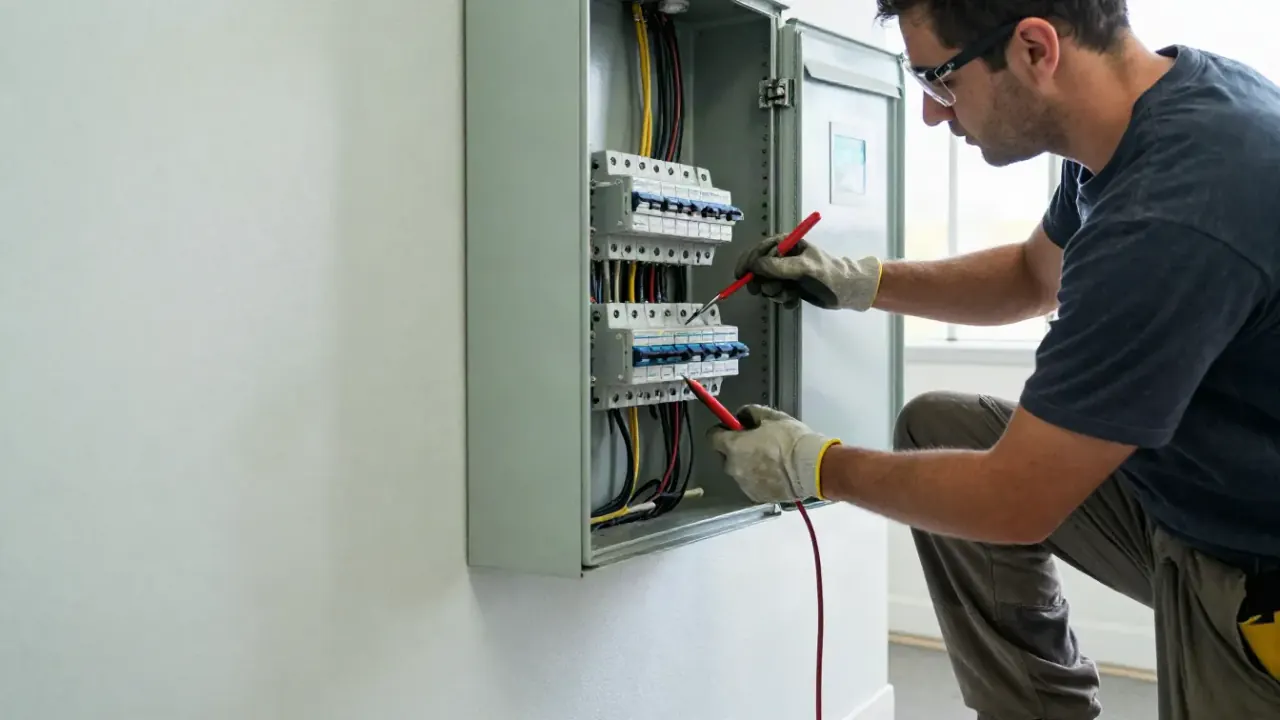
A surge device is only as good as its ground. We test the grounding electrode system with a multimeter and clamp meter, then confirm the panel's neutral and ground bonds are intact. If the ground resistance is high, we fix it before we call the job done.
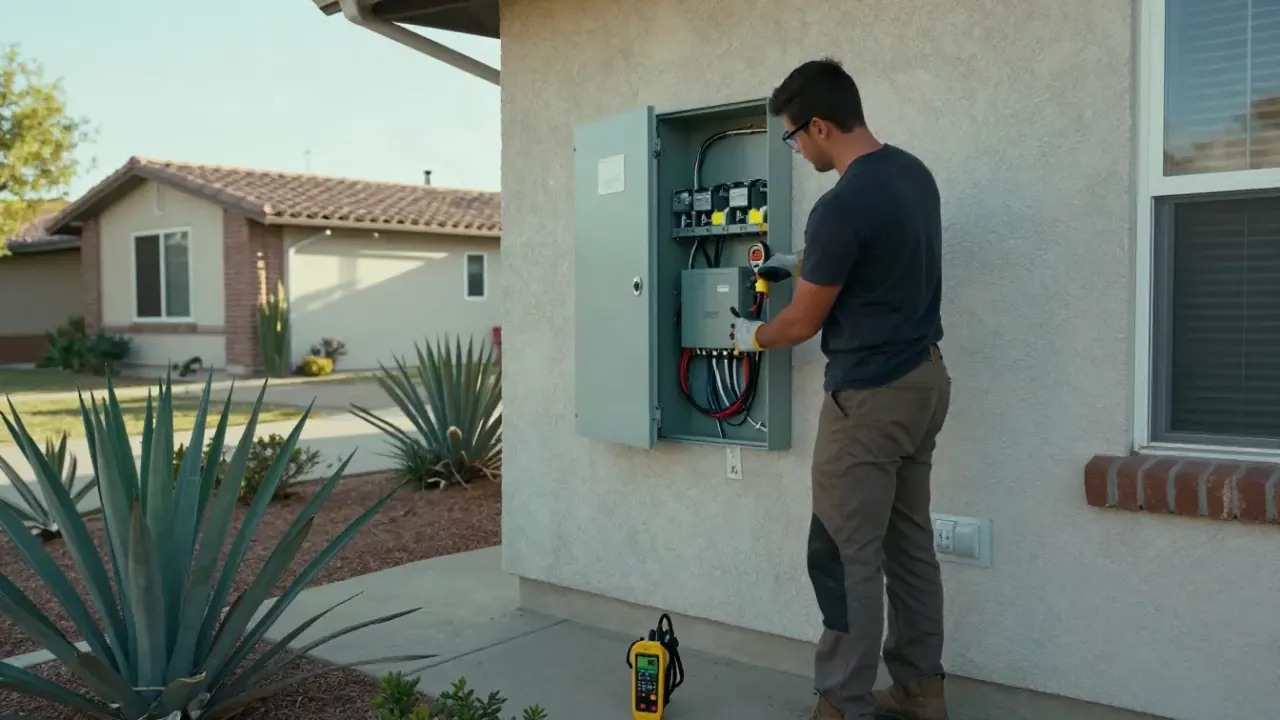
We energize the circuit, confirm the device's indicator lights show protection status, and label the new breaker. Then we walk you through what the lights mean and how to check them after a storm. Total install time runs 2 to 4 hours on a typical 200-amp panel.
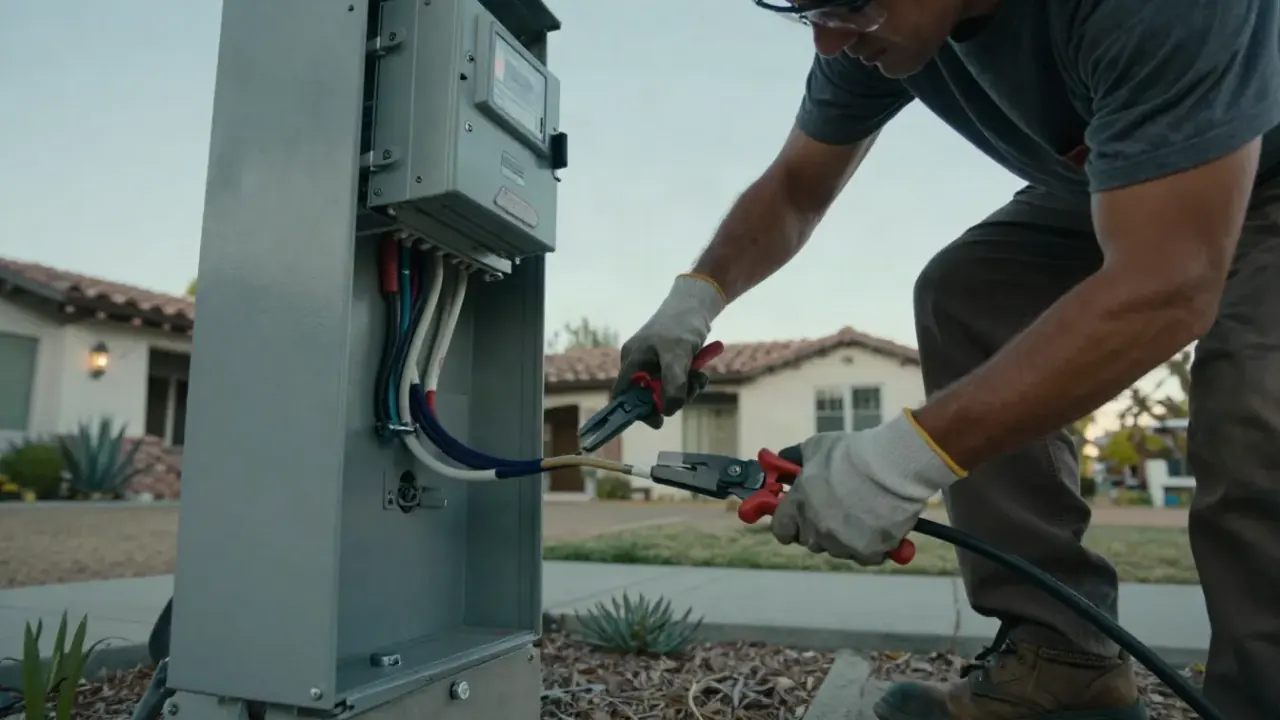
Move across a circle, or focus it and press Enter, for an illustrative thermal view of the photograph.
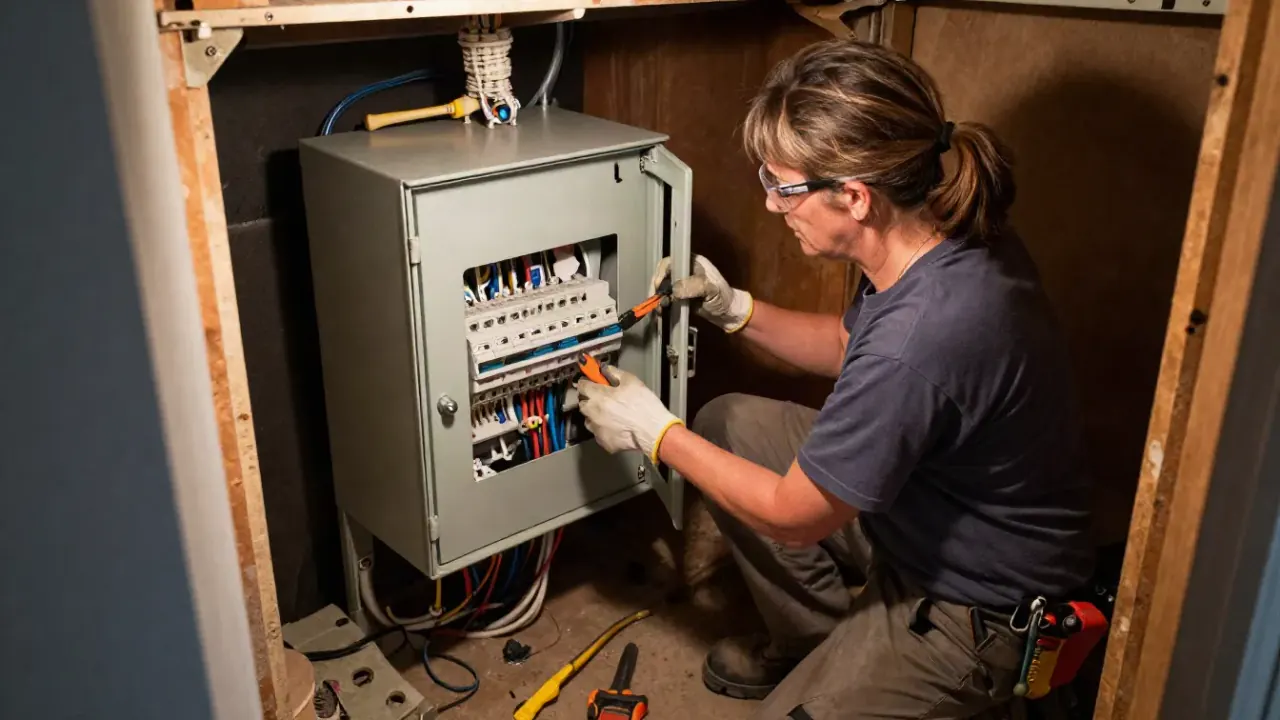
Verifies voltage at the panel, confirms the suppressor's status circuit, and checks for proper grounding before and after installation.
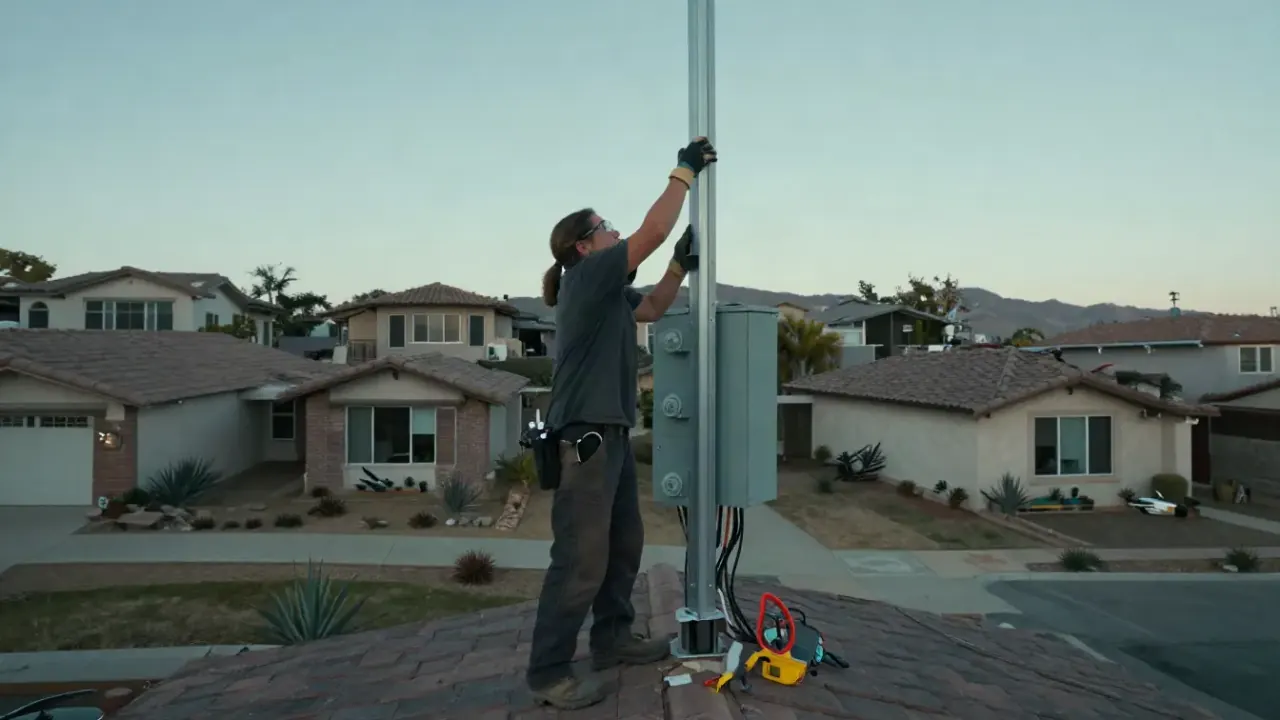
Measures current on the grounding electrode conductor to confirm the surge device has a low-impedance path to ground.
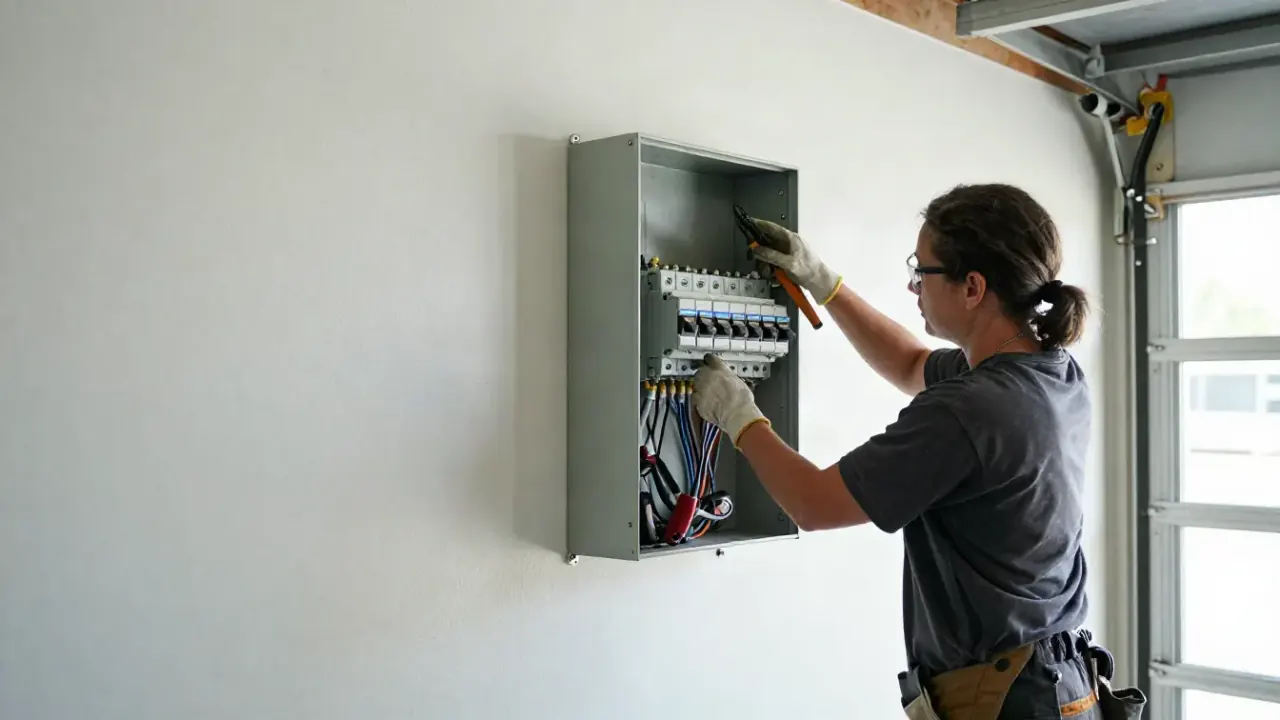
Tightens every breaker and lug termination to the manufacturer's specified inch-pounds, preventing loose connections that cause arcing.
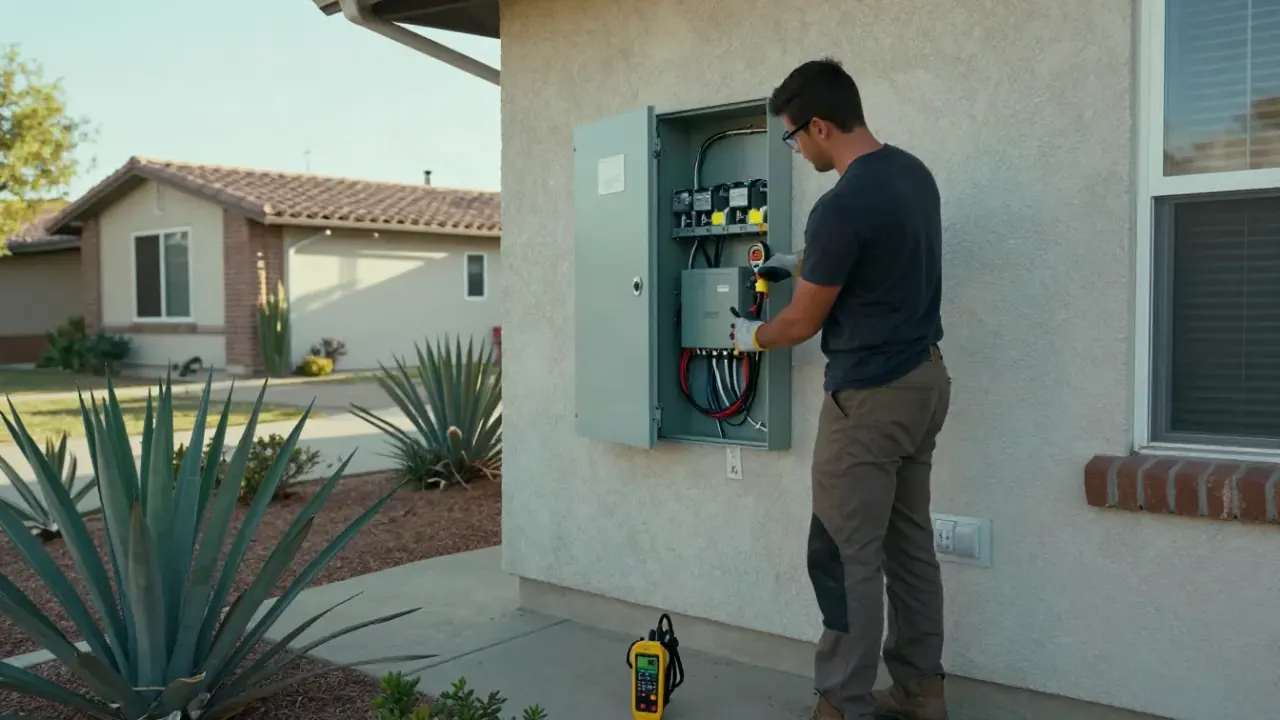
Confirms the circuit is de-energized before we open the panel, and verifies proper voltage after the suppressor is energized.
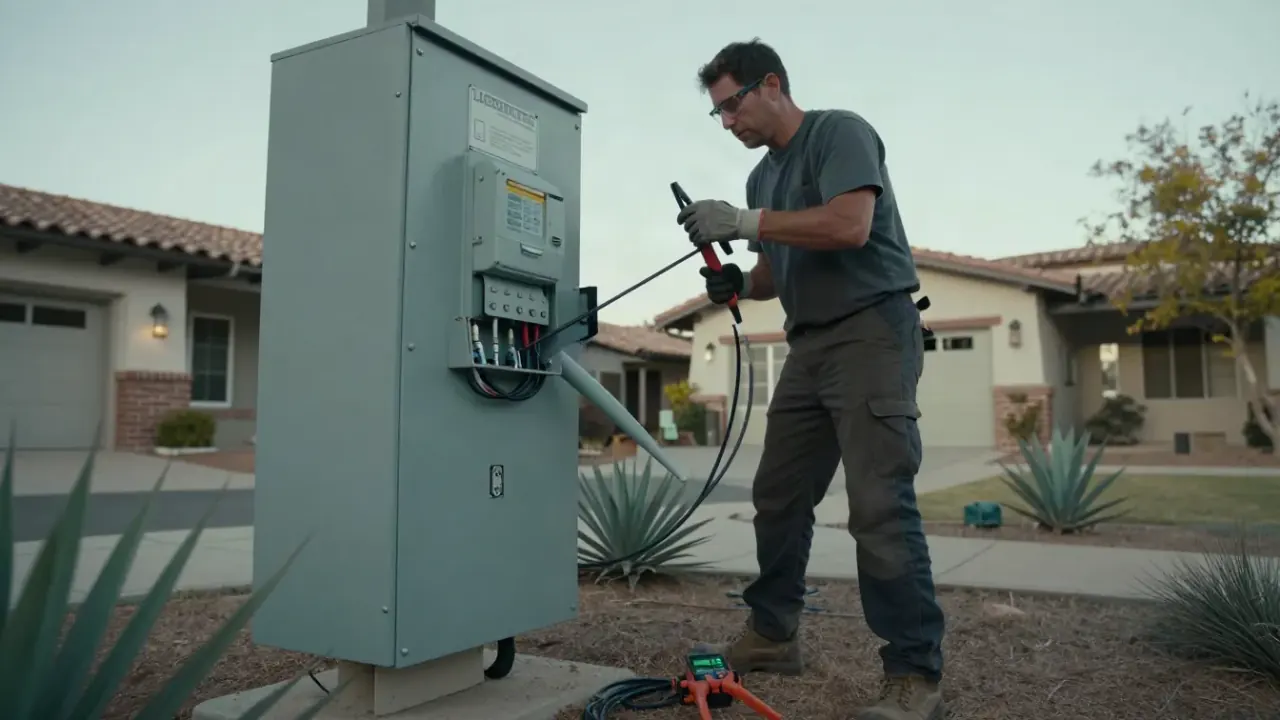
Cleanly strips copper conductors and cuts the short leads needed for a low-impedance connection between the device and the breaker.
Thermal views are illustrative, generated from the photographs.
OSHA-compliant hand protection for every panel entry, because we treat every service as live until we've tested it ourselves.
We follow the National Electrical Code requirements for surge protective devices, including conductor length, grounding, and overcurrent protection. Every install is inspected to California Electrical Code standards.
We mount the unit directly beside the panel and keep leads under 18 inches to minimize impedance.
Before we mount anything, we test the grounding electrode system with a multimeter and clamp meter. A surge device with a bad ground path is useless, so we fix grounding issues first.
We run a load calculation to confirm the service amperage and the connected load, including solar and EV circuits. That tells us which surge rating the panel actually needs.
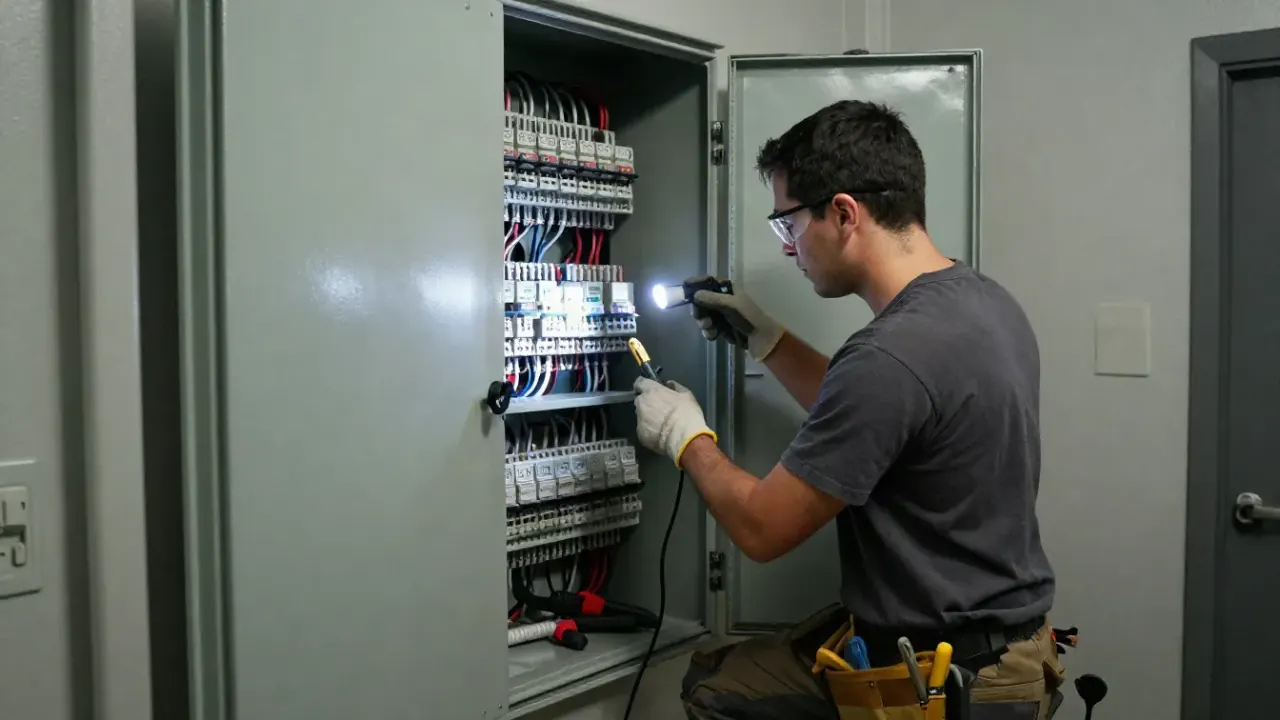
We inspect the panel, confirm the HVAC circuit is on the main service, and install a whole-house suppressor sized for the 200-amp panel. The device clamps future spikes before they reach the air handler.
Outcome: The HVAC board and every other circuit in the house are protected by a single device. The homeowner checks the indicator light after each storm and knows the system is working.
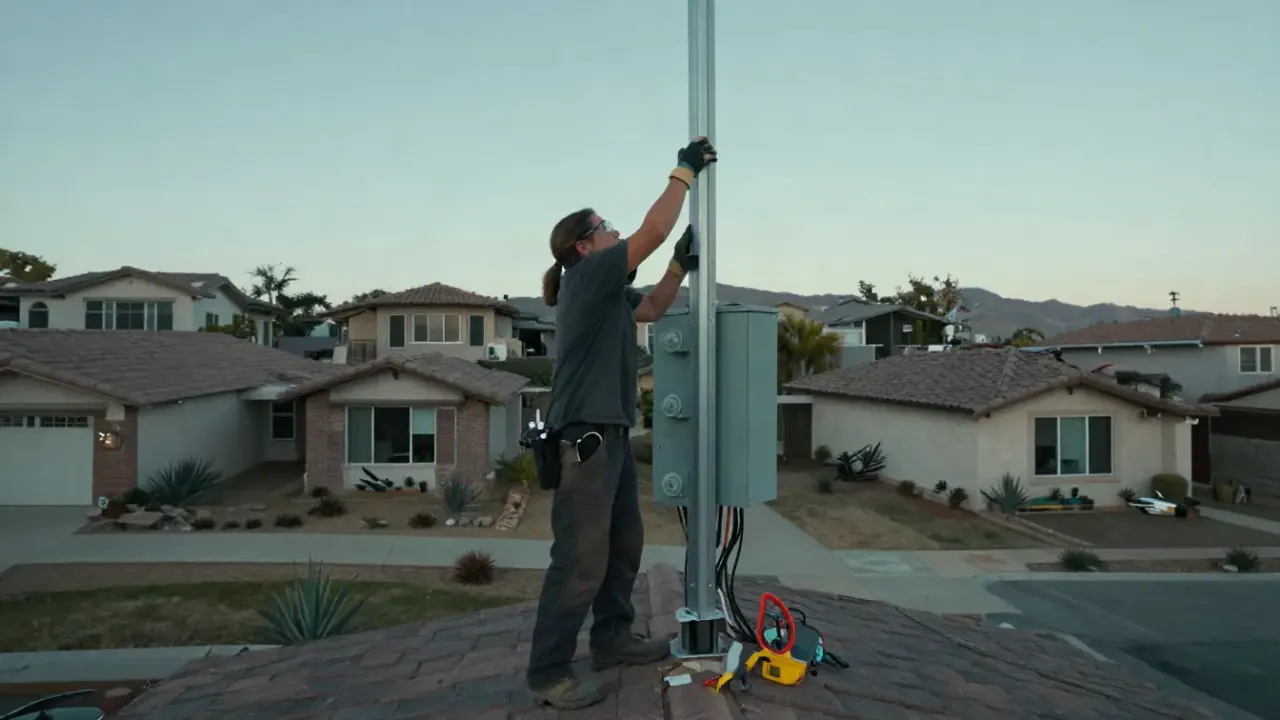
A solar homeowner in The Colonies wants surge protection that covers both the inverter and the EV charger on the same service.
We run a load calculation, verify the inverter and EV breaker positions, and install a higher-capacity surge protective device rated for the combined demand. Grounding is tested and documented.
Outcome: Both the solar inverter and the EV charger are covered at the panel.
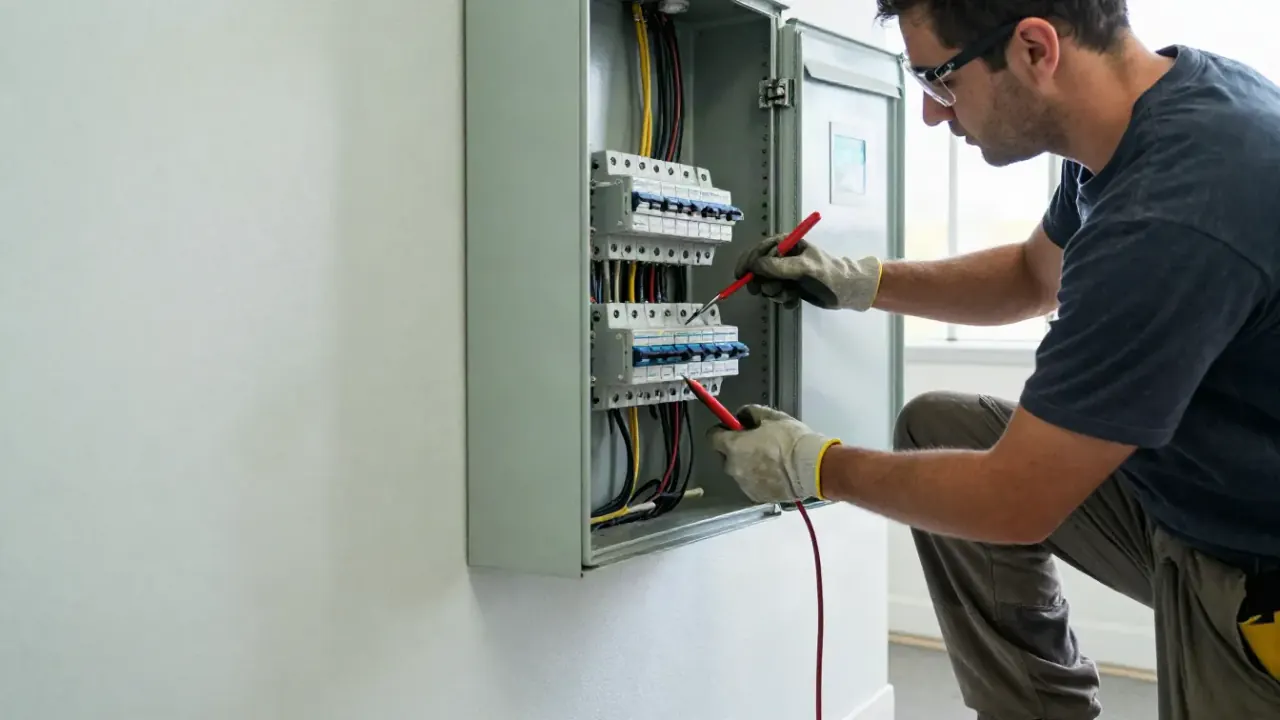
A property manager in Historic Downtown Upland had a tenant's refrigerator fail after a utility switching event and wants protection for all four units.
We inspect the shared service, install a commercial-grade suppressor at the main panel, and verify the grounding electrode system. The permit is pulled and the inspection is scheduled.
Outcome: All four units are protected from a single device. The manager documents the install for the property file and avoids another tenant claim next storm season.
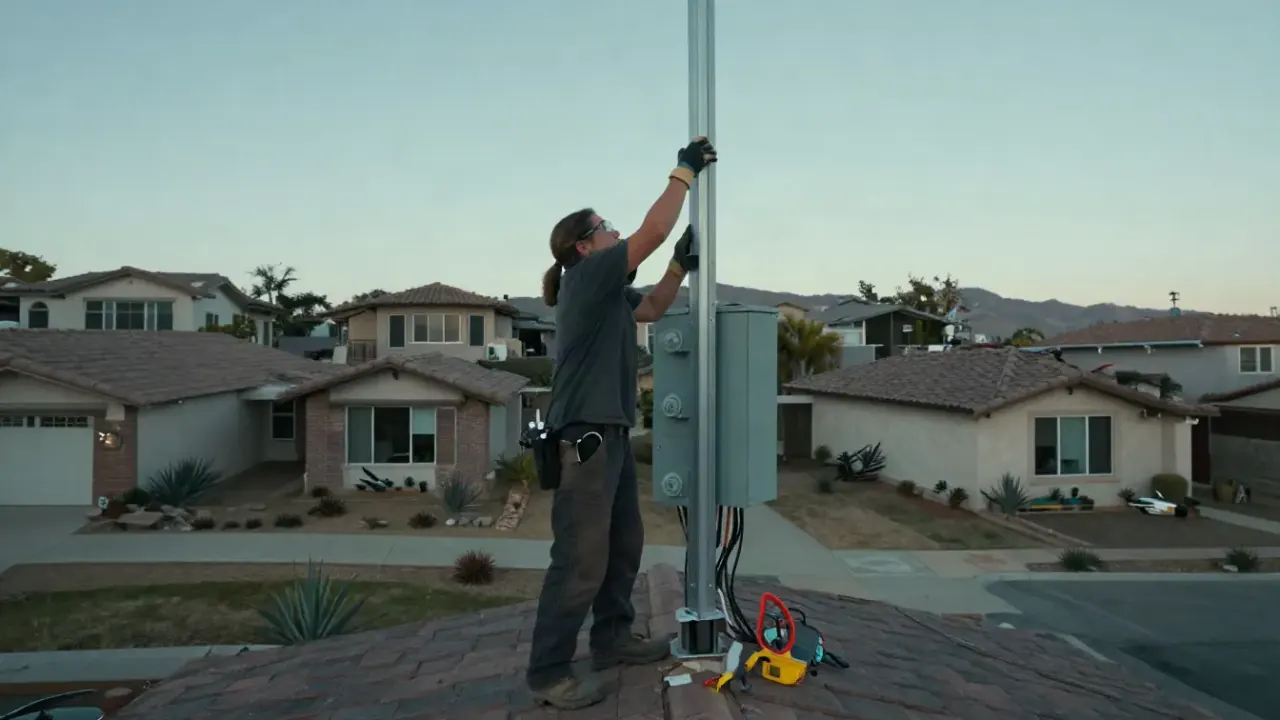
A homeowner in San Antonio Heights is converting a fuse box to a breaker panel and wants surge protection included in the same job.
We replace the fuse box with a 200-amp breaker panel, install AFCI and GFCI breakers where required, and mount a surge protective device on a dedicated 2-pole breaker.
Outcome: The home gets a code-compliant panel, modern circuit protection, and whole-house surge defense in one visit. No second appointment, no second permit.
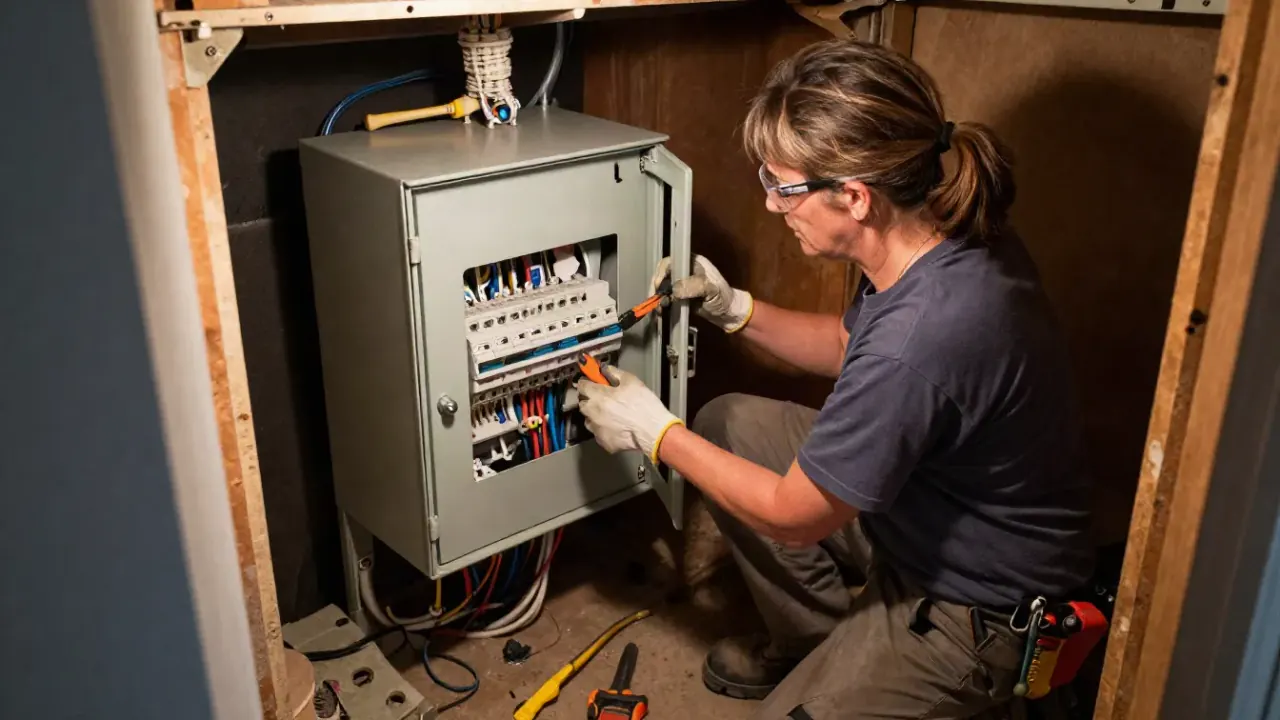
Upland's building stock ranges from 1920s bungalows near Historic Downtown to 1990s tract homes in The Colonies, and the electrical panels reflect that range. Older homes often have 100-amp services with aging grounding electrodes, while newer builds may have 200-amp panels with solar taps. We size the surge protective device for what's actually there, not what a spec sheet assumes.
San Bernardino County storm seasons bring lightning and utility switching surges that hit Upland CA electrical surge protection systems hard, especially in exposed neighborhoods like San Antonio Heights and Upland Hills. If you're searching for the cost to install whole-home surge protection in Upland CA, we quote the job after inspecting the panel, not before.
We pull city electrical permits when required and verify grounding to NEC standards on every install.
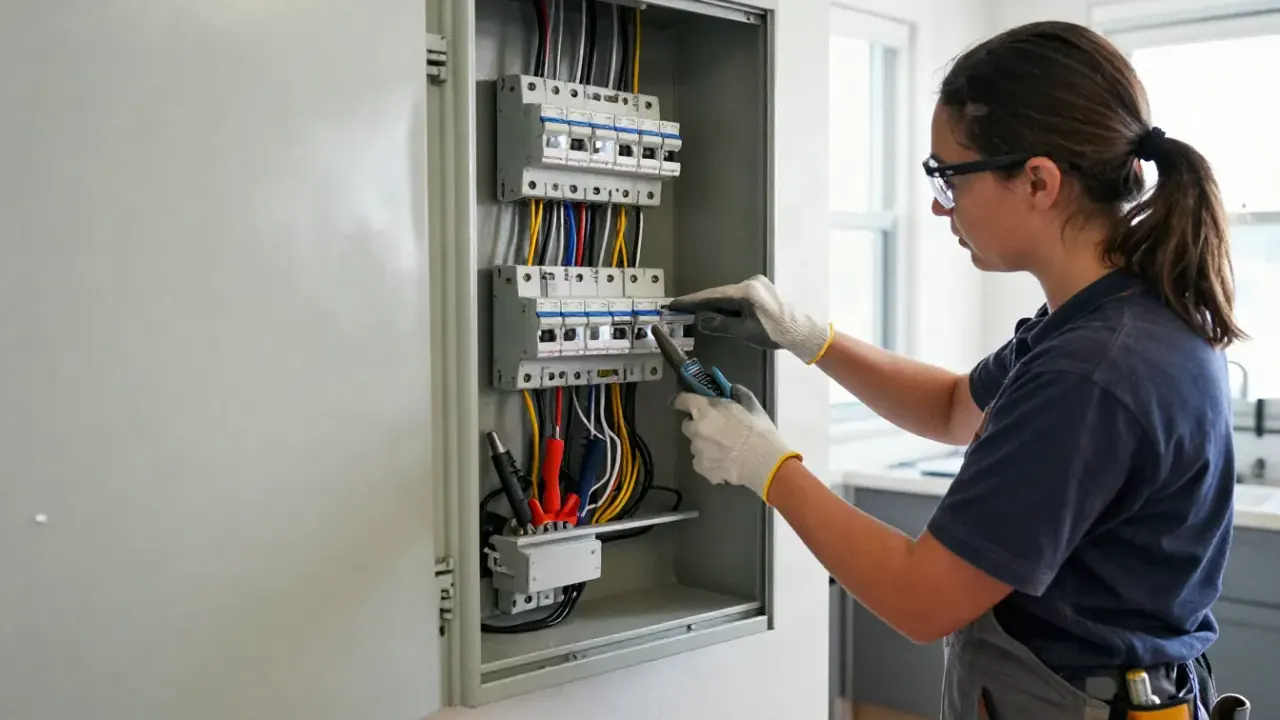
Before: The 200-amp panel had no surge protection and a loose neutral bond that we found during inspection.
After: We corrected the neutral bond, installed a whole-house suppressor on a dedicated 2-pole breaker, and tested the grounding path. The HVAC system and every other circuit are now covered by one device.
Check the suppressor's indicator light after each storm season. If the light goes out, the device has absorbed a surge and should be replaced. Most units last five to ten years.
Before: A 1950s home near Historic Downtown Upland still had a 60-amp fuse box with no grounding electrode. The owner wanted surge protection but the panel couldn't support it.
After: We replaced the fuse box with a 200-amp breaker panel, installed AFCI and GFCI breakers, and mounted a surge protective device on a dedicated breaker. The permit was pulled and inspected.
Test AFCI and GFCI breakers monthly using the test buttons. Check the surge device indicator light after storms and keep the panel label legible for future service.
Before: A homeowner in The Colonies had a 200-amp panel with a solar inverter and a Tesla charger.
After: We ran a load calculation, installed a higher-capacity surge protective device rated for the combined solar and EV demand, and verified the grounding electrode conductor with a clamp meter.
Inspect the suppressor indicator after each storm. Have the grounding system re-tested every three years, especially if you add more solar panels or another EV charger.
Most surge damage doesn't come from a direct lightning strike. It comes from smaller utility switching events that add up over years.
One device covers every circuit and protects your most expensive equipment.
A whole house surge suppressor Upland, California clamps that spike at the panel before it reaches the branch circuit. We've seen units absorb multiple hits in one storm season and keep working.
Point-of-use strips only protect what's plugged into them. A panel mounted surge protector Upland CA covers the garage freezer, the bedroom TV, and the kitchen appliances simultaneously. One device, every circuit, no plugging and unplugging during storms.
Repeated small surges degrade breaker mechanisms and corrode bus bars over time. Clamping those spikes at the service entrance reduces nuisance breaker tripping and keeps your Square D or Eaton panel operating within spec. That matters when your panel is already 20 years old.
Upland CA surge protection for solar panels and EVSE equipment is one of the strongest arguments for a whole-house unit. We size the device for the combined load and verify it with a clamp meter.
What a written scope covers and what shapes it. Prices are set by the business after the first look.
Included
Depends on
Clear records you can keep and share.
Breaker marked for surge protection circuit
Grounding and voltage readings documented
Manufacturer instructions left with you
City permit and inspection record
Not all surge protection is the same. Here's the difference between what you plug in and what we mount at the panel.
Power strips that protect one outlet
Device wired at the main panel
A list like this tells people straight away whether you cover their street. Not listed? Call and ask: it only takes a minute.
Based in Upland and covering the places around it. Pick one for local details.
A basic 100-amp panel sits at the low end; a 400-amp service with solar taps and a long conductor run pushes toward the top. We quote the full job before we start, so there's no surprise line item.
Yes, if your home has electronics worth more than the install cost. A suppressor costs a fraction of that and covers every circuit at once. Upland's storm season and utility switching surges make the math easy for most homeowners.
A standard install takes 2 to 4 hours. That includes panel inspection, device mounting, breaker installation, grounding verification, and testing. If we find an overloaded electrical panel or need to correct a grounding issue first, we'll tell you before we proceed and schedule the additional work.
Yes, as long as the device is sized for your service amperage and the EV circuit is on the protected panel. We verify the charger's breaker position and confirm the suppressor's rating covers the load. For solar and EV combinations, we often recommend a higher-capacity unit to handle both.
Other services from the same team.
Call (909) 850-3163 and we'll size the right surge protective device for your panel over the phone. Most installs are done in a single visit, and we verify your grounding before we leave.
Call or email with your address and what the panel is doing, and we will tell you what the job likely involves. We answer calls Monday through Friday, 8am to 6pm, and return messages from Upland, Rancho Cucamonga, and Ontario the same business day. For dead panels and burning smells, say so on the call.